- Análisis
- Noticias Comerciales
- El rendimiento de los bonos del Tesoro a 30 años ha superado el 5%
El rendimiento de los bonos del Tesoro a 30 años ha superado el 5%
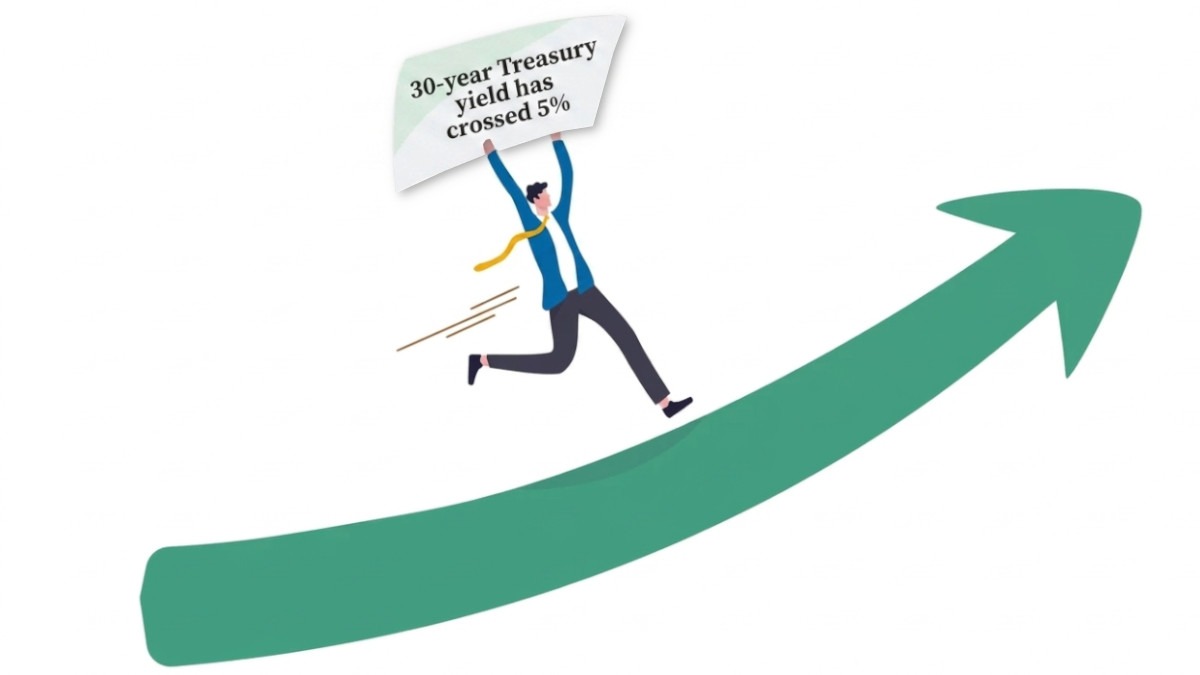
El rendimiento de los bonos del Tesoro a 30 años ha superado el 5%, veamos quién paga las consecuencias
- 5%
Rendimiento a 30 años superado - 39 billones de dólares
Deuda nacional - 1,2 billones de dólares
Coste anual de intereses
Durante meses, inversores y prestatarios han estado pendientes del umbral del 5 % en el bono del Tesoro estadounidense a 30 años. La semana pasada, el rendimiento a 30 años alcanzó el 5 %, mientras que el de 10 años se mantuvo justo por debajo del 4,50 %.
La Fed ha perdido el control
La Reserva Federal ha perdido el control. La Reserva Federal ha estado recortando las tasas de interés, y al mercado de bonos simplemente no le importa. La Fed redujo su tasa de referencia del 5,25-5,50% al 3,50-3,75% durante el último año. Los rendimientos a largo plazo apenas se movieron. De hecho, subieron.
La única herramienta de emergencia real que queda es el control de la curva de rendimiento. La Fed compra cantidades ilimitadas de bonos a largo plazo para limitar artificialmente los rendimientos. Esto es inflacionario, exactamente lo contrario de lo que necesita Estados Unidos cuando la inflación ya supera el objetivo del 2%.
El dolor de cabeza de 1,2 billones de dólares para el gobierno
La deuda nacional de Estados Unidos asciende a 39 billones de dólares, aproximadamente 1,2 veces el PIB anual. La deuda puede gestionarse siempre que la economía crezca más rápido de lo que se acumula. El problema radica en los intereses. En 2020, el gobierno pagó alrededor de 500 mil millones de dólares al año en intereses; hoy paga más de 1,2 billones.
Cada punto básico de aumento en los rendimientos le cuesta al gobierno cientos de millones en pagos anuales adicionales por deuda nueva y refinanciada. Con rendimientos del 5 al 7%, el gobierno o bien recorta el gasto en sanidad, educación y defensa, o bien acepta una espiral de deuda cada vez mayor. Ninguna de las dos opciones es buena.
Los estadounidenses de a pie también lo sienten
Cuando sube el rendimiento de los bonos a 10 años, las tasas hipotecarias lo siguen. Los propietarios con tasas variables ven cómo sus pagos mensuales aumentan. Las tasas de las tarjetas de crédito, que ya rondan el 25%, se disparan aún más, el poder adquisitivo disminuye y, en algunos casos, los hogares empiezan a incumplir con sus pagos.
La buena noticia es que las tasas de morosidad hipotecaria a 90 días siguen por debajo del 1%, lo que significa que una repetición del colapso inmobiliario de 2008 no está en el panorama inmediato. En el resto de los sectores, los niveles de estrés están aumentando rápidamente.
Las grandes tecnológicas no son inmunes
Alphabet, Amazon, Meta y Microsoft han estado invirtiendo a gran escala en infraestructura de IA, y gran parte de ello se financia con deuda. Con una tasa de interés del 5%, esa deuda resulta cara. Con un 7%, algunas de esas inversiones dejan de ser financieramente viables.
Alphabet y Amazon cuentan con los flujos de caja necesarios para absorber esta situación. Sin embargo, Oracle, por ejemplo, se encuentra en una posición más frágil. Su deuda ha aumentado y su flujo de caja libre se ha vuelto negativo. Si los rendimientos siguen subiendo y la rentabilidad de las inversiones en IA resulta decepcionante, la combinación será desfavorable. OpenAI, sin beneficios y con cientos de miles de millones en deudas, se enfrenta a un panorama similar.
Tres razones por las que los rendimientos podrían seguir subiendo
El índice de materias primas de Bloomberg ya ha superado su pico de 2022 y se mueve en estrecha relación con la inflación en EE. UU. Si la interrupción en el estrecho de Ormuz se agrava, los precios de las materias primas subirán, la inflación aumentará con ellos y los rendimientos de los bonos seguirán la misma tendencia.
Japón es el mayor tenedor extranjero de deuda pública de Estados Unidos, con aproximadamente el 4% de todos los bonos del Tesoro en circulación. Para defender el yen, que se ha estado debilitando fuertemente a medida que aumentan los costos de importación de energía, el Banco de Japón ha estado vendiendo bonos del Tesoro estadounidense. Cada venta aumenta la oferta de bonos - lo que empuja los precios a la baja y los rendimientos al alza.
Gigantes tecnológicos compiten por los inversores en bonos. Alphabet, Amazon y otras empresas similares emiten ahora deuda a niveles cercanos a los del gobierno estadounidense, con una prima de interés del 0,60%. Para los inversores, esa rentabilidad adicional es significativa, por lo que ahora los bonos corporativos tecnológicos compiten directamente con los bonos del Tesoro estadounidense por el mismo conjunto de capital.
En resumen
El umbral del 5% en el bono a 30 años es una señal de que la era del dinero barato ha terminado. La inflación persistente, la guerra entre EE. UU. e Irán y la retirada de Japón de la deuda estadounidense están empujando los rendimientos al alza. A menos que el gasto se controle o la inflación caiga bruscamente, la presión sobre los rendimientos solo se intensificará.
Nueva herramienta poderosa, Technicals USDX
Nueva herramienta poderosa, Technicals USDX
Análisis Técnico en tiempo real con pronóstico instantáneo utilizando los indicadores y osciladores más populares.
Intentar ahora

Si no encuentras una forma de ganar dinero mientras duermes, trabajarás hasta morir.- Warren Buffett